
About the project
Heritage guides went quiet. We're giving them a voice back.
Most cultural guides are static text on a laminated sign, if they exist at all. jowal is our attempt to replace that with something that actually looks back at you: a phone camera that reads a facade or a tile the way a local historian would, then tells you about it in your own language.
What we're building toward
Accuracy over hallucination
Every scan is checked against a grounding database of verified Casablanca landmarks and craftsmanship before the AI narrates anything, so the story you hear is anchored in real research, not a guess.
A voice for everyone
Moroccan Darija sits alongside Modern Standard Arabic, English, French, Spanish, German, Italian, and Mandarin, because a heritage guide that only speaks one language isn't really open to the public.
Built to survive a bad connection
Demo Mode runs entirely on pre-cached data and pre-generated narration, no live network call required. That's the same resilience that makes a good field guide useful in a place with patchy signal.
Discovery, not homework
XP, badges, and quest prompts turn a walk through the city into something closer to a scavenger hunt than a museum audio tour, built for an audience that would rather explore than read.
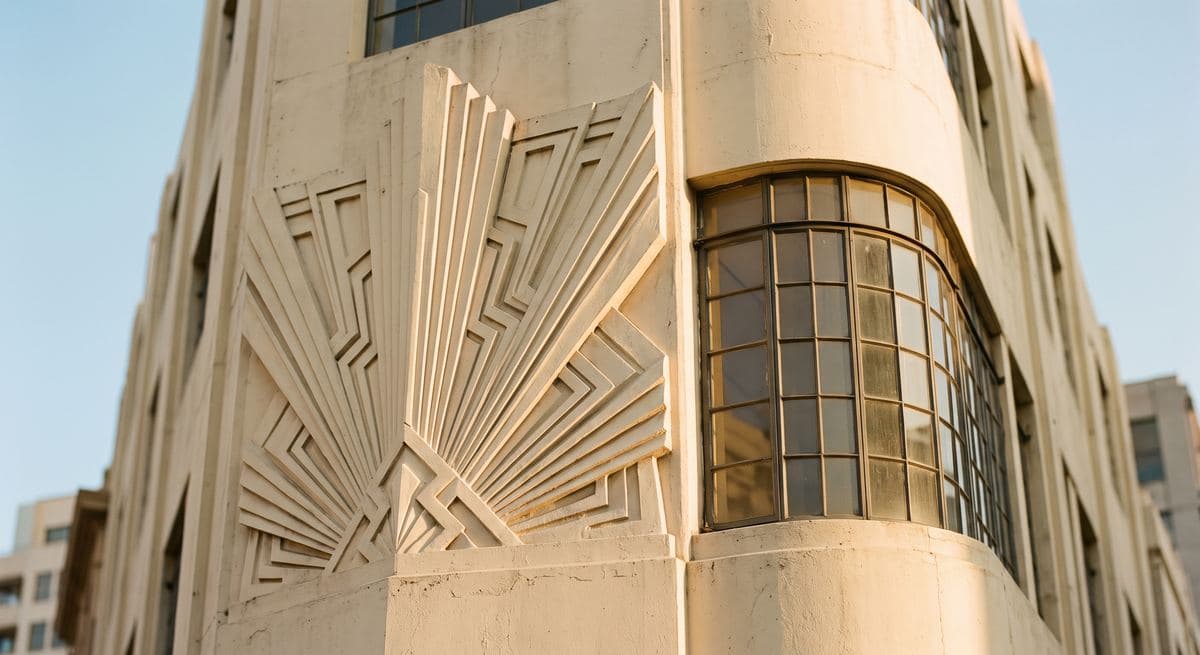
1930s facade relief
Why Casablanca
Casablanca doesn't get talked about as a heritage city the way Fez or Marrakech do, but its streets carry two distinct architectural memories at once: centuries of Moroccan craftsmanship in zellige, gebs, and carved cedar, layered against a remarkable stretch of 1920s-30s Art Deco built during the French protectorate. Most visitors walk past both without knowing what they're looking at.
jowal starts there, grounded in real landmarks like the Hassan II Mosque, Cinéma Rialto, and the Habous quarter, because a smart tourism tool is only as good as the place it actually knows.
Field notes on the build